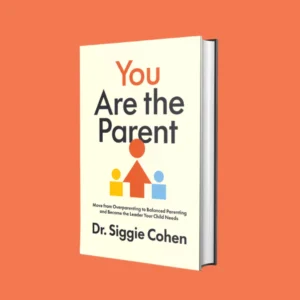


Parenting is a dynamic and ever-evolving process. Across my decades of working with thousands of families and raising my own children, I’ve discovered six foundational principles that are essential for raising a connected, emotionally healthy, and functional family.
These principles are more than just strategies, they’re guiding philosophies that apply to every stage of parenting and extend into other areas of life. Best of all, you can start using them right now. Let’s dive in!
1. Family-Centered Parenting
As a parent, you are the leader of your family, and that’s not just okay; it’s necessary. Your role is to guide, mentor, and create a healthy balance of authority and respect within your household.
While previous generations leaned toward parent-centered parenting (Think: “Because I said so!” or, “My way, or else!”), today’s approach oftentimes swings too far in the opposite direction, creating child-centered households where children hold too much power.
It’s as if parents have lost a navigation system they once naturally possessed, and with it the ability to be the steady drivers of their family.
(Have we shifted from, “Because I said so!” to, “Whatever you say!”?)
Instead, I aim to bring the balance back with a family-centered approach, where:
- Everyone’s voice is heard and respected, but not all wants are accommodated.
- Power is shared appropriately, with parents providing guidance and children gaining responsibility over time.
- You trust your authority and the leadership role you have earned through knowledge and experience, and your children feel safe in your capable hands.
Your grounded authority is a vital part of creating consistent, healthy parameters that foster trust and security. You are the parent, and you’re in charge – and that’s a good thing.
2. Happy is Not the Goal
Do you ever feel like you just want your child to be happy all the time? I challenge you to rethink this mindset.
Not only is being “happy all the time” unrealistic, it’s also unhealthy. It prevents children from learning to navigate life’s full range of emotions.
Let’s shift this unreasonable goal to one that’s more fitting and significant. Your goal is to help your child feel, accept, and manage through all of life’s emotions, both the “good” ones and the “bad” ones.
Your child learns to manage their emotions when they are give the space to feel them. This is why you do not need to immediately fix each problem, fill in every blank, or stop your child from feeling their emotions.
Think of it as the difference between:
- “Don’t be sad! What’s wrong? Let’s fix this! Here, try this!”
And:
- “I can see you’re feeling disappointed. I understand. We all feel that way sometimes. When you’re ready, let’s see what we can do to help you feel a bit better.”
Giving your child the space to feel and sit with their emotions is the first step towards emotional resilience and self-regulation.
3. It’s Not a Crisis
Children are naturally impulsive, intense, extreme, and emotional. Have you noticed? 🙂
This intensity creates a false sense of urgency for parents. But here’s the thing: most of the time, it’s not actually a crisis.
Instead of reacting to your child with equal intensity, aim to do the opposite: slow things down. Match your child’s intensity with your calmness and composure.
For example:
- Take a moment to pause before responding to the daily, “I’m thirsty!”, “I’m bored!”, “I want!”, “I don’t want!”
- Remind yourself: It’s not a crisis. My child is expressing a want. I can respond calmly and model composure.
- Slow your automatic reaction and calm any panic. “I hear you. You’re feeling bored. What would you like to do about that? How can you help yourself?”
Slowing down gives you the space to think clearly and replace some of that false urgency with the space your child needs to develop their own problem-solving and self-regulation skills.
Your child is intense. You are not.
4. Look Inward
Parenting is as much about managing your own emotions as it is about guiding your child to manage theirs. Your triggers, automatic reactions, and heightened emotions are all valid and important, but they can interfere with your ability to parent effectively.
Looking inward involves building your own emotional awareness:
- Pausing to check in with yourself before responding.
- Acknowledging your own emotions without letting them drive your reactions.
- Reflecting to become more aware of your triggers.
This is one of the hardest principles to master, but it’s also one of the most transformative. By looking inward and managing your emotions, you create the space to be the grounded and responsive parent your child needs.
5. Say What You Mean
Clear, direct communication is essential for effective parenting. Saying what you mean is one of the most valuable parenting tools you have at your disposal.
How often do you catch yourself asking a question when you really mean to make a statement?
For example:
- Instead of: “It’s time for dinner, okay?” say: “It’s time for dinner. Please come to the table.”
- Instead of: “Why aren’t you in bed yet?” say: “It’s bedtime. I need you in bed now.”
- Instead of: “Why did you hit your brother?” say: “No hitting. You can feel angry, of course. You cannot hit when you’re angry.”
When you communicate clearly and confidently, you create trust and clarity in your home. Your child knows what to expect and feels secure in the structure you provide.
6. Healthy Emotions Lead to Healthy Behaviors
The connection between emotions and behaviors is undeniable. The path to your child behaving well on the outside is intimately tied to them feeling good on the inside.
When your child is overwhelmed by emotions, those feelings often “spill over” into behaviors like tantrums, hitting, or screaming.
Building emotional regulation skills helps your child expand their capacity to hold and process emotions with less of those spillovers.
Instead of suppressing feelings, guide your child to explore and manage them. Ask questions like:
- “What would you like to do about this?”
- “How can you help yourself feel better?”
- “What’s an idea for how we can make this work?”
These moments teach coping skills that will serve your child for life.
Putting It All Together
These six principles form the foundation of healthy, balanced, and effective parenting:
- Family-Centered: Lead your family with grounded authority.
- Happy is Not the Goal: Let your child experience all emotions, not just the happy ones.
- It’s Not a Crisis: Respond calmly to your child’s intensity.
- Look Inward: Manage your emotions before guiding your child.
- Say What You Mean: Communicate clearly and confidently.
- Healthy Emotions, Healthy Behaviors: Build emotional regulation to support better behavior.
These principles are at the heart of my parenting approach and my courses. They’re designed to help families create strong connections, clear communication, and a healthy dynamic where everyone thrives.
Ready to Transform Your Parenting Journey?
I’ve built these principles into my parenting courses, which are packed with practical tools, scripts, and strategies you can use immediately:
- The Everything Toddler Course (ages 1–3): Navigate tantrums, independence, and early emotional regulation.
- The Everything 3-7 Course (ages 3–7): Handle outbursts, lying, anxiety, and new challenges as your child grows.
- The Everything Siblings Course (all ages): Reduce sibling rivalry and build lasting connections.
- The Potty Training Guide: Make potty training a stress-free process.
- The Everything Anxiety Course (ages 3 and up): Support your child through separation anxiety, social fears, perfectionism, and everyday worries while building trust, strength, and inner security.
Let’s work together to create the balanced, thriving, emotionally attuned family you’ve always envisioned.
 The 5 Principles That Will Change How You Handle Sibling Conflict
 The Hardest Part of Parenting: Managing Your Own Emotions