
In over 35 years of working with families, I have noticed a pattern repeat itself again and again: many parents are working incredibly hard to give their children more voice, more choice, and more autonomy—but sometimes in ways that unintentionally create more confusion, negotiation, and overwhelm.
Choices absolutely matter. Autonomy matters too. But many parents end up focusing on the wrong kinds of choices or simply offering far too many of them. (I talk more about that here.)
We spend enormous amounts of time asking children for their buy in for daily activities, many of which are not decisions for children to make, they’re actually our decisions to make.
- what they want to eat
- what they feel like doing
- if they’re ready to leave a place
- if they want to brush their teeth, take a bath, clean up and so on
- what time they want to go to bed
This is completely understandable.
Parents today genuinely want their children to feel respected, included, heard, and empowered. But sometimes, in our effort to be collaborative and kind, we unintentionally lean into passivity, confusion, or permissiveness.
Autonomy and power of choice are incredibly important for children. The key is understanding where that autonomy matters most.
There are two areas where children deeply benefit from having freedom, ownership, and self-expression—yet these areas are often overlooked.
Those two areas are:
- emotions
- and play
Why Children Need Full Ownership Over Their Emotions
This is one of the most important ideas for parents to understand: Your child does not control every situation. But they do have full ownership over their emotional experience.
Your child may not get to decide what time bedtime is or whether they have to complete homework, but they absolutely get to decide how they feel about those things.
They have full autonomy of choice to feel angry, frustrated, disappointed, jealous, overwhelmed and full spectrum of their emotions. And those feelings do not need to be argued away, shut down, fixed, or talked out of them.
This is where true emotional empowerment begins. (As well as ownership, containment, and regulation)
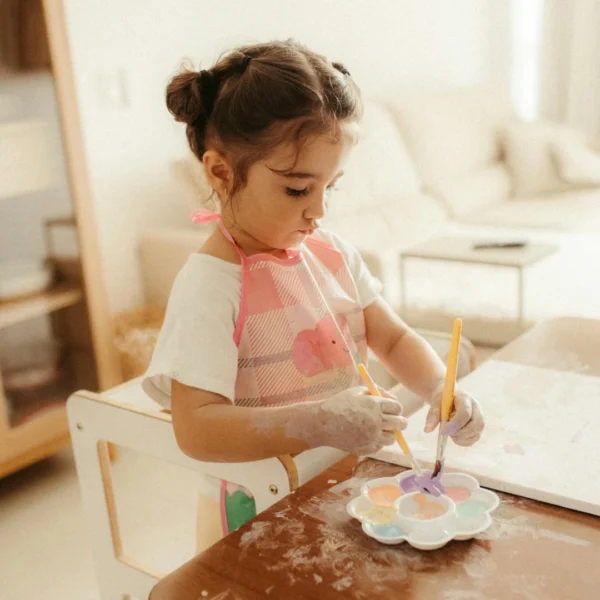
Many parents unintentionally confuse emotional validation with accommodation or permissiveness. But allowing feelings does not mean removing boundaries. You can absolutely say: “You’re allowed to feel angry, absolutely! Even SO angry with me.” You can absolutely say: “I know this is so disappointing. You can feel upset for as long as you need to.” This is the balance: Children need both. When children are allowed to safely experience their emotions within your clear guidance, they begin to identify feelings, tolerate discomfort, communicate more clearly, develop self-awareness, and recover from difficult emotions more effectively. The second area where children need enormous freedom is play. Play is not “extra.” Play is not a prize after the real work is done. Play is how children naturally learn and take in the world. Through play, children make decisions, solve problems, experiment, create, process emotions, and feel capable and powerful. In play, children get to direct the experience, and that feeling of agency is deeply important. When children are constantly directed, entertained, corrected, or over-scheduled, they lose opportunities to develop this internal sense of creativity, competence, and autonomy. One of the most powerful things you can do during play is follow your child’s lead. Allow them to make choices freely: And begin noticing and reflecting back the choices they are making: Help your child become more aware of their own thinking, creativity, preferences, and decision-making process. Many parents today are trying so hard to empower their children that they accidentally hand over too much control in the wrong places. But lasting empowerment comes from helping them develop a strong inner voice, emotional awareness, self-trust, and confidence in their ability to navigate life. Your child does not need unlimited power over every family decision. But they do need places where they feel safe, capable, and deeply themselves. And emotions and play are two of the most important places for that to happen. When you protect those spaces, you are supporting something incredibly important: Your child’s developing sense of self. No. Emotional autonomy and behavioral limits are not opposites, they work together. Your child has full freedom to feel angry, frustrated, or overwhelmed. They do not have the freedom to hit, throw things, or harm others when those feelings arise. “You are allowed to feel angry” and “You cannot hit when you’re angry” are two sentences that coexist, and children develop best when they experience both. Empowerment comes from a child having a strong inner voice, emotional self-awareness, and confidence in their ability to navigate life. Control over every family decision does not build that. Sit nearby without directing. Resist the urge to suggest, correct, or improve on what they are doing. Notice their choices and reflect them back with curiosity: “You decided to build it that way,” or “What a creative idea.” The goal is to help your child become more aware of their own thinking and decision-making process, not to evaluate it.
And also: “You still need to just get it done. Let’s get started.”
And also: “You cannot hit when you’re angry.”
And also: “Feeling upset doesn’t mean slamming a door. There are other ways to show me how upset you are.”
Why Child-Led Play Is Not Optional, It’s Developmental
What Real Empowerment Actually Looks Like (It’s Not What Most Parents Think)
Frequently Asked Questions
Does allowing my child’s emotions mean I have to remove all boundaries?
What is the difference between empowering a child and giving them too much control?
How can I follow my child’s lead during play?
 Are We Giving Our Children Too Many Choices?
 Decoding Your Child’s Social Style